本刊編輯部 整理 Compiled by the Editorial Staff VBS 672
1976
宣公上人自1976年起,便考慮興建新的大雄寶殿,其後將計劃擴增為包括禪堂、圖書館、齋堂、男女僧眾寮房等完整的道場設備。當時法界佛教大學藝術學院院長楊英風、台灣著名的建築師李祖原、洛杉磯知名建築師楊祖明、乃至台灣妙法寺的如田法師,都曾先後幫忙設計規劃。來自北京的中國古建築專家張馭寰的設計更龐大,將萬佛聖城核桃園也規劃為東區道場的一部分。
Since 1976, the Venerable Master Hsuan Hua had been considering the construction of a new Great Buddha Hall. The plan was later expanded to include a complete set of monastic facilities, such as a Chan Hall, library, dining hall, and dormitories for both monks and nuns. At that time, Yang Ying‑feng, Dean of the Art Institute at Dharma Realm Buddhist University; the renowned Taiwanese architect C.Y. Lee; the well‑known Los Angeles architect Yang Tsu‑ming; and even Dharma Master Rutian of Taiwan’s Miaofa Monastery all contributed to the design and planning at various stages. The design proposed by Zhang Yuhuan, an expert in traditional Chinese architecture from Beijing, was even more extensive, incorporating the walnut ranch at the City of Ten Thousand Buddhas as part of the planned eastern monastery complex.
1984
自1984年起,萬佛聖城便已著手提出妙覺山興建計劃的申請。這一宏願,源於宣公上人培育僧才、弘揚正法的深遠考量,也由此展開了一段跨越數十年的建設歷程。
Since 1984, the City of Ten Thousand Buddhas has been engaged in the application for the construction of Wonderful Enlightenment Mountain Project. This great vision arose from Venerable Master Hua’s far-reaching commitment to fostering monastic cultivation and propagating the Proper Dharma. From this aspiration emerged a construction effort spanning several decades.
上人開示於1992年9月11日:
「我早就想造一個正式的佛教道場,頭一次申請在萬佛殿後邊那塊空地上,造一座三百呎乘兩百呎那麼大的佛殿,可以有一萬個人來拜佛。結果政府也已經批准了。可是我們為了長遠的計劃,又改了地址,改在五觀堂前面草坪上,政府也批准了住眾的寮房,可是因為這塊地配合不起來,有捉襟見肘的這種趨勢,雖然說三十多畝,可是還不夠來陪襯這個佛殿,雖然批准了,我們又改了,又改到東邊九十多畝,有個樹林子那個地方。可是這回呀!因為屬於農地的關係,就開了很多次公聽會,有的就贊成,有一班農民就反對。這樣子一拖,又拖了好幾年。如果計劃通過了,我們正式造一個佛教宮殿式的廟宇,那麼所有修道的人,都可以搬到一起去,設備方面,傳戒,或做什麼事情都很夠用,地方也很合用。這個樣子才算是萬佛聖城上了軌道了,我們在那邊把妙覺聖寺造好了,這一邊(西區)一切的地方、建築物,就改做大學、中學、小學來使用。」
On September 11, 1992, the Venerable Master gave the following instruction:
“We had long intended to build a proper Buddhist monastery. Our initial plan was to construct a Buddha Hall on the open land behind the Hall of Ten Thousand Buddhas, measuring 300 by 200 feet—large enough to accommodate ten thousand people bowing to the Buddha. The government had already approved the proposal.
However, for the sake of long-term planning, we relocated the site to the lawn in front of the Dining Hall of Five Contemplations. The government also approved residential quarters for the community there. Yet this site proved inadequate—it felt constrained and insufficient. Although it covered more than thirty acres, it still could not properly accommodate such a grand Buddha Hall. Therefore, despite having received approval, we revised the plan once again, relocating it to a wooded area of more than ninety acres to the east. This time, however, because the land was zoned for agriculture, numerous public hearings were required. Some people supported the project, while a group of farmers opposed it. As a result, the process was delayed for several more years. If the plan is eventually approved, we will build a formal, palace-style Buddhist monastery. Cultivators will then be able to live and practice together in one place, with facilities fully equipped for ordinations and other activities. The grounds will be entirely suitable for cultivation. Only then can the City of Ten Thousand Buddhas be considered truly on the right course. Once Wonderful Enlightenment Monastery is completed, this site (the West Campus) can be repurposed as a university, high school, and elementary school.”
1987
1987年12月,妙覺山興建計劃提出完整構想,定名為「Buddhist Training Academy」(佛教訓練學院)。歷經兩年多努力,於1991年完成環境影響評估報告。該計劃規模宏大,預計興建七十棟建築,可容納八百位常住眾,為一完整而長遠的弘法藍圖。
In December 1987, the Wonderful Enlightenment Mountain construction project was expanded into a comprehensive proposal and formally named the Buddhist Training Academy. After more than two years of effort, the Environmental Impact Report was completed in 1991. Ambitious in scope, the project envisioned the construction of seventy buildings to support a residential community of eight hundred people, forming a complete, long-term blueprint for the propagation of the Dharma.
1992
理想的落實並非一蹴可及。1992年2月,門都西諾郡參事會(縣議會)雖未批准此項計劃,但也未予以否決。他們要求法界佛教總會與鄰近的農戶合作,解決他們的疑慮。上人本著慈悲與智慧,對整體設計進行調整,包括建築高度與面積的縮減,並將預定地由東側道路向內退讓,最終與鄰近農友達成共識,為日後的推進奠定了基礎。
Yet the realization of this vision could not be achieved overnight. In February 1992, Mendocino County Board of Supervisors, while not approving the project, did not reject it. They asked DRBA to work with the neighboring farmers to address their concerns. With compassion and wisdom, the Venerable Master revised the overall design, reducing the height and scale of the buildings and setting the project farther back from the eastern roadway. Through these thoughtful adjustments, consensus was eventually reached with neighboring farmers, laying a solid foundation for the project’s future progress.
2001
2001年1月22日,妙覺山工程的第一階段——地點的通過,將近完成,萬佛聖城為此特地舉辦了一次與鄰居的預備會議,在客堂舉行,約五十人出席。會中展示許多相片圖表,藉以說明並回答問題,以便工程的計劃發展能和諧進行。
On January 22, 2001, as the first stage of the Wonderful Enlightenment Mountain Project—the site approval process—was nearing completion, the City of Ten Thousand Buddhas organized a preparatory meeting with neighboring residents. Held in the Guest Building and attended by about fifty people, the meeting used photographs and charts to present the project and address questions, fostering mutual understanding and supporting the project’s harmonious development.
2001年7月1日,萬佛聖城廿五週年紀念法會,三百餘位信眾,隨恒律法師與恒良法師一路念誦觀世音菩薩聖號,步行至妙覺山計劃預定地,並於當地誦持〈大悲咒〉,為這片土地種下清淨而堅定的因緣。
On July 1, 2001, during the 25th Anniversary Dharma Assembly at the City of Ten Thousand Buddhas, more than three hundred participants, led by Dharma Masters Heng Lyu and Heng Liang, joined a ceremonial procession while reciting the holy name of Guanyin Bodhisattva. They proceeded to the proposed site of Wonderful Enlightenment Mountain Project, where they chanted the Great Compassion Mantra, thereby planting pure and resolute causes and conditions for the land.
2002
2002年12月3日,法界佛教總會提出之「國際哲學倫理研究院」興建申請,正式獲得加州門都西諾郡參事會(縣議會)通過,標誌著計劃邁入新的里程碑。計劃地點在萬佛聖城境內東邊發展新區。
On December 3, 2002, the application submitted by the Dharma Realm Buddhist Association to construct the “International Institute for Philosophy and Ethics” was officially approved by the Mendocino County Board of Supervisors, marking a new milestone in the project’s development. The site is located in the eastern expansion area of the City of Ten Thousand Buddhas.
2004
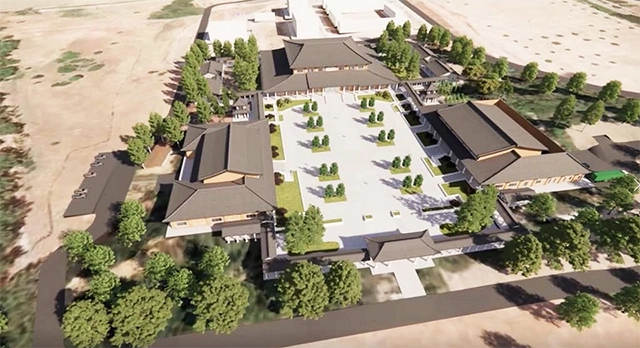
2004年2月5日,建設進程再度推進。郡政府召開第一次建築設計公聽會,規劃委員會對整體設計進行審議。會中由律師介紹設計進展,建築團隊則展示未來藍圖:一座可容納二千八百人的多功能大殿,大殿前設廣場,後方依序為齋堂、圖書館與戒壇,兩側規劃男女寮房,整體布局莊嚴而有序。該設計草案當日即獲郡政府規劃委員會全票通過。
2004年4月20日獲郡參事會(縣議會)一致批准通過。
2004年5月,郡政府規劃與建築部門正式確認許可證生效。
On February 5, 2004, the project reached another milestone as Mendocino County convened its first public hearing on the architectural design. During the hearing, the Planning Commission reviewed the overall proposal. Legal counsel outlined the project’s progress, while the architectural team presented detailed plans for the future complex: a multi-purpose main hall accommodating up to 2,800 people, with a plaza in front; behind it, a dining hall, library, and ordination platform arranged in sequence; and on both sides, residential quarters for male and female monastics. The overall layout was dignified and well ordered. The proposal was unanimously approved by the Planning Commission that same day.
On April 20, 2004, the project received unanimous approval from the Mendocino County Board of Supervisors.
In May 2004, the Department of Planning and Building Services formally confirmed that the permits had taken effect.
2005
2005年6月,適逢上人涅槃十週年紀念日,萬佛聖城於妙覺山舉行「國際哲學倫理研究院」動土典禮。大眾齊聚一堂,以虔誠之心,為這項承載願力的工程揭開新頁。
這項計劃最早名為「佛教訓練學院」,宣公上人並為這座學院的佛殿建築命名為「妙覺聖寺」。其後「佛教訓練學院」更名為「國際哲學倫理研究院」,並經門都西諾郡政府通過,取得建築許可。因建築用地位於妙覺山麓,故妙覺山計劃監督委員會之後改採新名稱「妙覺佛教學院」,冠以「妙覺山建設計劃」之名。但在郡政府登記的名稱仍為「國際哲學倫理研究院」。雖名稱多次調整,其弘法育才之宗旨始終如一。
In June 2005, marking the tenth anniversary of the Venerable Master’s nirvana, the City of Ten Thousand Buddhas held a groundbreaking ceremony for the “International Institute for Philosophy and Ethics” at Wonderful Enlightenment Mountain. The assembly gathered in sincere devotion, inaugurating a new chapter in a project founded upon great vows.
The project was originally known as the Buddhist Training Academy. The Venerable Master personally named its Buddha Hall “Wonderful Enlightenment Sagely Monastery.” It was later renamed the International Institute for Philosophy and Ethics and subsequently received building approval from Mendocino County.
As the construction site is located at the foot of Wonderful Enlightenment Mountain, the project’s supervisory committee later adopted the name Wonderful Enlightenment Buddhist Institute, under the broader designation of the “Wonderful Enlightenment Mountain Construction Project.” However, the official name registered with the county government remains the International Institute for Philosophy and Ethics. Although the name has undergone several changes, its fundamental mission—to propagate the Dharma and cultivate future generations—has remained constant throughout.
2011
2011年,郡政府對宗教教育培訓設施「國際哲學倫理研究院」的使用許可,進行了有條件的更新和修改。
In 2011, Mendocino County renewed and revised the use permit for the religious educational facility known as the International Institute for Philosophy and Ethics, subject to certain conditions.
2016
2016年6月12日,「妙覺佛教學院」舉行動土典禮。上人涅槃二十一週年紀念日當天,於莊嚴法會後,由恒律法師帶領大眾誦持大悲咒並灑淨,隨後與多位法師及當地政要共同舉行動土儀式。當日約千名僧俗大眾見證此歷史時刻,法喜充滿,並迴向工程順利。然而,建設之路仍需因緣具足。施工前重新測量發現,原有二點六英畝濕地擴展至十六點六英畝,影響原規劃布局。
經審慎評估,遂於2016年9月向郡政府申請調整施工範圍,將第一期和第二期工程北移四百呎,以順應自然條件。
On June 12, 2016, the Wonderful Enlightenment Buddhist Institute held a groundbreaking ceremony. Marking the 21st anniversary of the Venerable Master’s nirvana, the day began with a solemn Dharma ceremony. Led by Dharma Master Heng Lyu, the assembly chanted the Great Compassion Mantra and performed a purification ritual. This was followed by the official groundbreaking, conducted jointly by several Dharma Masters and local civic leaders. Approximately one thousand monastics and laypeople were present to witness this historic moment, filled with Dharma joy and dedicating the merit to the project’s smooth progress. Yet the progress of construction still depended on the convergence of appropriate causes and conditions. A new pre-construction survey revealed that the originally identified 2.6 acres of wetlands had expanded to 16.6 acres, affecting the initial site layout.
After careful evaluation, an application was submitted to Mendocino County in September 2016 requesting an adjustment to the construction boundaries. The first and second phases of the project were subsequently shifted 400 feet northward to better accommodate the natural conditions.
2016年10月6日郡政府規劃委員會舉行公聽會後,全票無異議通過。
2016年11月14日郡參事會再度舉行公聽會,同樣無異議通過。妙不可言的是,北移四百呎後,即將興建的新佛殿,恰座落於郡政府批准的施工範圍内最高點。
On October 6, 2016, following a public hearing, the Mendocino County Planning Commission unanimously approved the revised proposal without objection.
On November 14, 2016, the Mendocino County Board of Supervisors held another public hearing and likewise granted unanimous approval. Notably, after the site was shifted 400 feet northward, the future Buddha Hall was found to be situated precisely at the highest point within the county-approved construction area.
2017
法界佛教總會董事於2017年初的董事會中,投票擇定大雄寶殿的外觀設計。之後進行細部設計和施工圖設計,其後,設計持續細化,董事會亦著手選定大雄寶殿外觀方案,並規劃後續施工藍圖。
2017年8月17日獲得第一期工程 整地許可。但因雨季將臨,而門都西諾郡政府規定每年10月中旬至次年4月中旬之雨季期間不得整地,因此將整地工程延至2018年5月。
In early 2017, the Board of Directors of the Dharma Realm Buddhist Association selected the exterior design of the Main Buddha Hall. This was followed by the preparation of detailed architectural and construction drawings. As the design continued to be refined, the Board further finalized the hall’s appearance and established plans for the subsequent phases of construction.
On August 17, 2017, a grading permit for Phase I was obtained. However, with the rainy season approaching—and county regulations prohibiting grading work from mid-October through mid-April—site preparation was postponed until May 2018.
2018
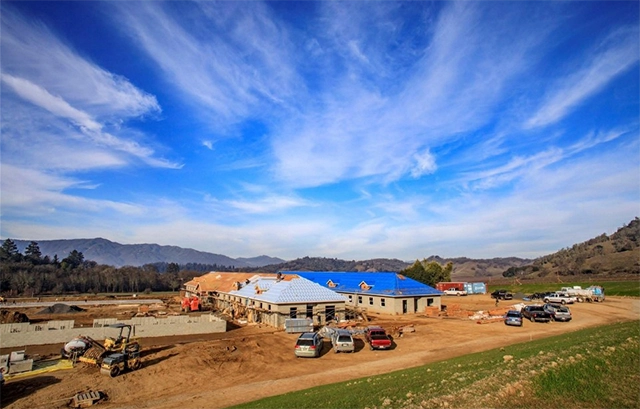
2018年,適逢上人百歲誕辰,妙覺山建設計劃取得關鍵進展。2018年5月7日,第一期工程正式開始整地;6月26日,獲門都西諾郡批准建築施工許可,標誌著工程得以正式展開。
In 2018, marking the centennial of the Venerable Master’s birth, the Wonderful Enlightenment Mountain construction project reached a critical milestone. On May 7, site grading for Phase I officially commenced; on June 26, construction permits were approved by Mendocino County, signaling the project’s formal launch.
2019、2020、2021、2022
隨後數年,工程穩步推進:
2019年:持續第一期建設,同步展開第二、三期設計。
2020年:完成第一期五棟建築,並啟動後續基礎工程,第二期設計持續深化。但新冠疫情爆發,影響施工進度與建材價格。
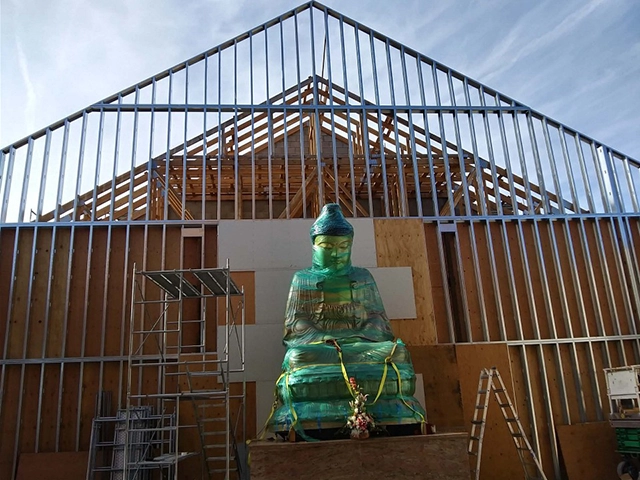
2021年:妙覺佛教學院新佛殿,一直以來因為在農地的使用地上,所以高度限制只能在50英尺以內,7月1日,經公聽會通過,高度限制由50英尺提升至65英尺,為整體設計帶來重大突破。
2021年9月下旬起,妙覺山計劃園藝組開始在第一期工程建地種植紅木,至10月中旬,已種了138棵紅木。
2022年:第一期工程施工接近完成,第二期工程進入細部設計階段。
In the years that followed, construction progressed steadily:
2019: Phase I construction continued, while design work for Phases II and III proceeded concurrently.
2020: Five buildings in Phase I were completed, and subsequent foundation work was initiated. Design for Phase II continued to be refined. However, the outbreak of COVID-19 affected construction timelines and led to rising material costs.
2021: Because the project is located on agriculturally zoned land, the height of the new Buddha Hall at the Wonderful Enlightenment Buddhist Academy had long been limited to 50 feet. On July 1, following a public hearing, this limit was unanimously raised to 65 feet, marking a significant breakthrough in the overall design.
Beginning in late September 2021, the landscaping team for the Wonderful Enlightenment Mountain project began planting redwood trees on the Phase I site. By mid-October, a total of 138 redwoods had been planted.
2022: The construction of Phase I neared completion, while Phase II entered the detailed design stage.
2025、2026
2025年12月,獲得第一期工程入住許可。2026年4月22日,男眾僧團正式入住。回顧這段歷程,從最初的構想到實際動工,歷經四十餘年,無數因緣交織、調整與等待,方得今日之成果。在時間的淬鍊中,見證信願行的落實與延續。
In December 2025, the occupancy permit was granted. On April 22, 2026, the male monastic community formally moved in.
Looking back on this journey—from its earliest vision to the commencement of construction—more than four decades have passed. Countless causes and conditions have converged, requiring repeated adjustments and patient waiting before giving rise to what has been accomplished today. Through the refining passage of time, one witnesses the realization and continuity of faith, vows, and practice. ♦