By Lauren Bausch Chinese translated by Debbi Dai 蘿倫•鮑煦 文 戴黛比 中譯 VBS 650
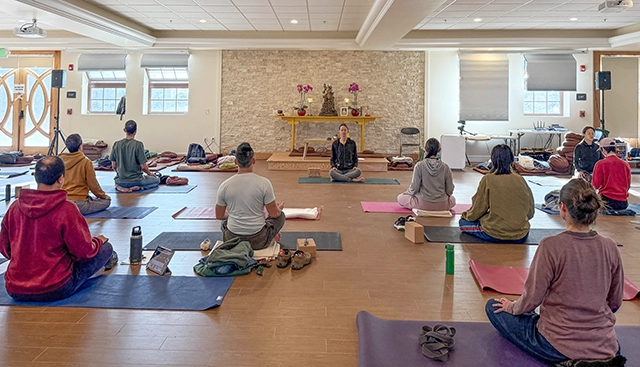
The spring Contemplative Exercise Immersion (CEI) on yoga and yogācāra was led by yoginī Sandy Lamerson and DRBU faculty March 10-13 in the Earth Treasury Hall. Taking a break from classes and nonessential work-study, faculty, staff, and students dove deep into Patañjali’s eight limbs of yoga, supplemented by parallel practices from yogācāra. While DRBU offered a yoga CEI led by Fabrizio Alberico in 2018 for a single cohort, this year was the first time that the entire university spent four days directly experiencing yoga practices together.
法界佛教大學(法大)2025年春季班的實修週自3月10日至13日,在萬佛聖城地藏殿舉行,由瑜伽行者桑迪•拉梅森與法大教授共同主持。全校師生暫停課業與非必要工讀,深入研習帕坦伽利的瑜伽八支,並輔以唯識學的相關修行。雖然法大曾於2018年由法布里齊奧·阿爾貝里科主持瑜伽實修週,但僅限於單一年級。本次則是全校首次共同投入四天,直接體驗瑜伽實修。
Yoga refers to both the goal, samādhi, and to the means to the goal, i.e. the practices that constitute the eight limbs of Patañjali’s Yogasūtra. Patañjali defines yoga as the cessation of the turnings of mind (yogaś citta-vṛtti-nirodhaḥ). Yoga presents a systematic process to become aware of the turnings of the mind and then to return to the original state of the mind. First, ethical practices (yama) and observances (niyama) ensure virtuous conduct that produces karmic conditions conducive to calming and unifying the mind. Posture (āsana) and breath-control (prāṇāyāma) help to clear impurities in the channels of the body so that a yogi can sit comfortably in meditation. Bringing around (pratyāhāra) the senses reveals the inherent form of the cittas ‘minds’, resulting in control of the senses, so the mind is not constantly pulled in the direction of the senses. Finally, the last three internal limbs of yoga—fixation (dhāraṇā), meditation (dhyāna), and samādhi—train the mind to hold its attention on an object of meditation until the object itself loses its own form. Liberation, which Patañjali understands as the isolation (kaivalya) of pure consciousness from the activities of karma and the material constituents, results.
瑜伽既指三昧的終極目標,也指通往目標的修行——即帕坦伽利《瑜伽經》八支的修持體系。帕坦伽利將瑜伽定義為「約束心靈的變化」,系統性地引導修行者覺知心識的運作,最終回歸心性本然。首先,持戒與精進確保德行清淨,創造能安定心識的業力條件;體位法與調息淨化脈絡,使瑜伽行者能安穩入座;調心揭示心的本然形態,令心不隨感官外馳。最後透過瑜伽內三支——專注、禪定、三昧——訓練心識專注所緣,直至所緣相消融。帕坦伽利所謂的解脫,即是純粹覺性和業力與物質元素徹底脫鉤。
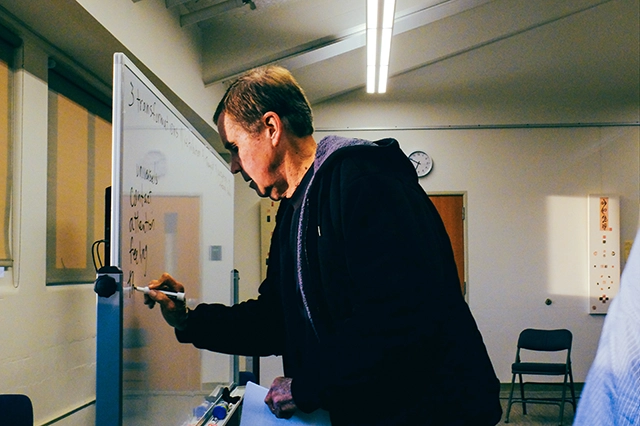
Yogācāra likely influenced other Indian yoga traditions, like Patañjali’s. Building on Abhidharma, Yogācāra describes how consciousness (vijñāna) imagines what is perceived when it does not see the karmic conditions that dependently arise as they really are. The CEI touched on key teachings and practices that align with Patañjali’s yoga. First, Yogācāra teaches that when consciousness grasps at what is to be grasped (grāhya), i.e. the mental factors that construct a given cognition of an object, then consciousness becomes a grasper (grāhaka). The duality of what is to be grasped and the grasper produces a concept that is not real, because what arises in consciousness is not as it appears. Like not perceiving sense objects in pratyāhāra (‘bringing around’ the senses), Yogācāra teaches not to grasp the object. When consciousness does not grasp an object, then there is no grasper and no new karma is generated. Once a yogi trains the mind not to grasp and to turn attention away from constructed objects and onto the underlying dependently arisen conditions, then holding the mind on the meditation object in practices like fixing (sthāpanā), meditation (dhyāna), and samādhi becomes much easier. From cultivating these practices comes awakening to the unconditioned mind.
唯識學可能影響了其他印度瑜伽傳統,如帕坦伽利的瑜伽學派。唯識學在阿毗達磨的基礎上,描述意識未能如實觀照緣起業力時,便會虛構所執境。本次修習營特別選取與帕坦伽利瑜伽相應的唯識教法:當意識執取「所取」(即構建對象認知的諸心所),便同時形成「能取」。這種虛妄二分正如制感修持中不緣感官對象,唯識學教導應離能所對待。當意識不執取對象時,既無能取亦不造新業。瑜伽行者訓練心識離執,轉向深層緣起條件時,止、禪定與三昧的修持將更易成就,終能覺證無為心性。
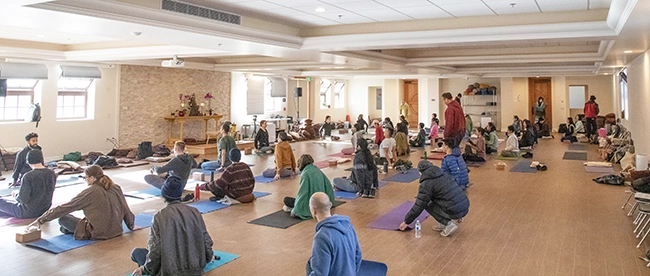
The CEI included an instructional talk and āsana practice in the morning along with a series of sitting yoga practices in the afternoon—all of which gave participants an opportunity to practice Patañjali’s eight limbs of yoga. Doug Powers anchored an optional evening session focused on Yogācāra. This CEI featured many female instructors, responding to requests for women teachers. All participants put the principles learned into action, practicing karma yoga, to clean up the Earth Treasury Hall at the end of the CEI.
每日上午進行體式教學與實修,下午則開展坐姿瑜伽系列修持,完整實踐瑜伽八支。鮑果勒主持晚間選修的唯識學專題。應學員要求,本次特別安排多位女性指導師。實修週圓滿時,全體以業瑜伽精神共同清掃地藏殿,踐行所學。
Student surveys after the CEI expressed gratitude for including practices from across the BA curriculum. One student commented: “Introducing [a] non-Buddhist tradition in [the] CEI was great.” Another student remarked, “There should be more of this! The program talks about being inclusive and holistic and diverse very often, but it doesn’t feel very reflected in the culture. This was a welcome change of pace.” In this way, DRBU faculty are making an effort to develop contemplative exercise immersions that reflect the teachings and practices found in the curriculum. The method of reading texts, discussing them in class, and then putting them into practice reflects the three prajñās in Buddhist tradition to learn, contemplate, and cultivate the Dharma.
活動後問卷顯示,學員對融入本科課程的跨傳統修持深表讚賞。有學生反饋:「在實修週引入非佛教傳統,這很棒!」;另一學生指出:「應該多辦這類活動!雖然課程常強調包容性與多元整合,但校園文化中較難感受到。這次真是令人欣喜的改變。」法大教職團隊正持續開發與課程相應的深度修習項目,體現佛教傳統中「聞思修」三慧的修學次第——研讀經論、課堂討論、實修印證。♦