宣公上人講於一九八六年十二月六日
Explained by the Venerable Master Hua on December 6, 1986
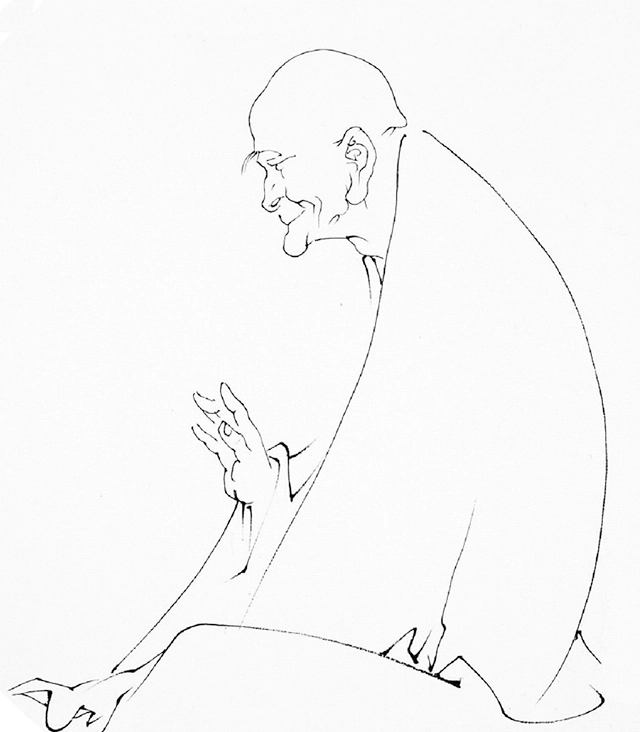
薄拘羅譯為善容,慈眉善目,貌容端正,和藹可親,令人肅然起敬。尊者於無量劫前,曾以一果供養病僧,感九十一劫無病。又持不殺生戒,故有五種不死之果報。所謂五不死者:(一)火燒不死。(二)湯煮不死。(三)水淹不死。(四)魚吞不死。(五)刀割不死。
Vakkula in Sanskrit means fine appearance: kind, handsome, congenial and inspiring reverence. Countless kalpas ago, Vakkula offered a fruit to a sick monk. Consequently, his karmic reward was to be free from sickness for ninety-one kalpas. Moreover, he upheld the precept against killing, and thus would not have to undergo the retribution of the five kinds of death — by burning, boiling, drowning, knife, and of being eaten by fish.
尊者於往昔為比丘時,曾發「不見女人面,不受女人供」之願。一日,其母思子心切,至寺中探子,尊者遣母出寺。母小瞋,發惡願,生生為養母,而報復之,不幸有此感報,年長投佛出家,少欲知足,身不重衣。世壽一百六十歲,為壽命第一。
When the Venerable One was a bhikshu in the past, he had made a vow that he would not meet any women or receive offerings from them. One day, his mother who missed him very much visited him in the temple, but the Venerable One sent her away. This really angered her and she vowed to be the mother who would raise him life after life to avenge this slight. Consequently, in this life, he had to undergo the unfortunate retributions of many attempts on his life — being burned, boiled, drowned, killed by knife, fed to a fish. Later in his life, he went forth and renounced the house-holder’s life under the Buddha. He was always content and had few needs — e.g., he never wore more than the basic attire.[1] He lived to be one hundred and sixty, and was foremost in lifespan.
贊曰 A verse of praise says:
宿植德本 種諸善根 香花供養 至純至真
持不殺戒 栽培慈心 身無病疾 心地長春
Constantly planting the roots of virtue and kindness,
He makes offerings of fragrant flowers, with supreme sincerity and purity.
Upholding the precept against killing and cultivating kindness,
He is free from sickness and his heart ever-verdant like Spring.
又說偈曰 Another verse says:
家貧獻果供病僧 九十一劫無疾侵
儀容端正多福慧 壽命第一超古今
五不死報顯奇蹟 百六高齡示後昆
因果循環法如是 世人榜樣好準繩
Offering fruits to a sick monk despite his poverty,
He remains free from illness for ninety-one kalpas.
His appearance fine and upright, his blessings and wisdom abundant,
He has the longest lifespan in history.
His karmic reward of freedom from the five kinds of death is a manifest miracle.
He shows future generations a lifespan of one hundred and sixty years.
Such is the cyclical Law of Cause and Effect.
He stands as a paragon and example for the world.